


Description
Parameter Information
| Brand | DOIT |
|---|
Frequently Asked Questions
Note: Product documentation is provided after purchase.
What is the relationship between DOIT and Espressif?
Espressif supplies the chips used in the ESP-series modules. DOIT develops and manufactures the ESP-series modules. Espressif Information Technology is a shareholder of DOIT.
What is the difference between the ESP8285 and ESP8266?
The ESP8285 integrates 1 MB of flash memory with the ESP8266 core. Its package and low-level protocols are fully compatible with the ESP8266. The ESP8285 offers higher integration and improved high-temperature performance.
Which module should ESP8266 customers choose?
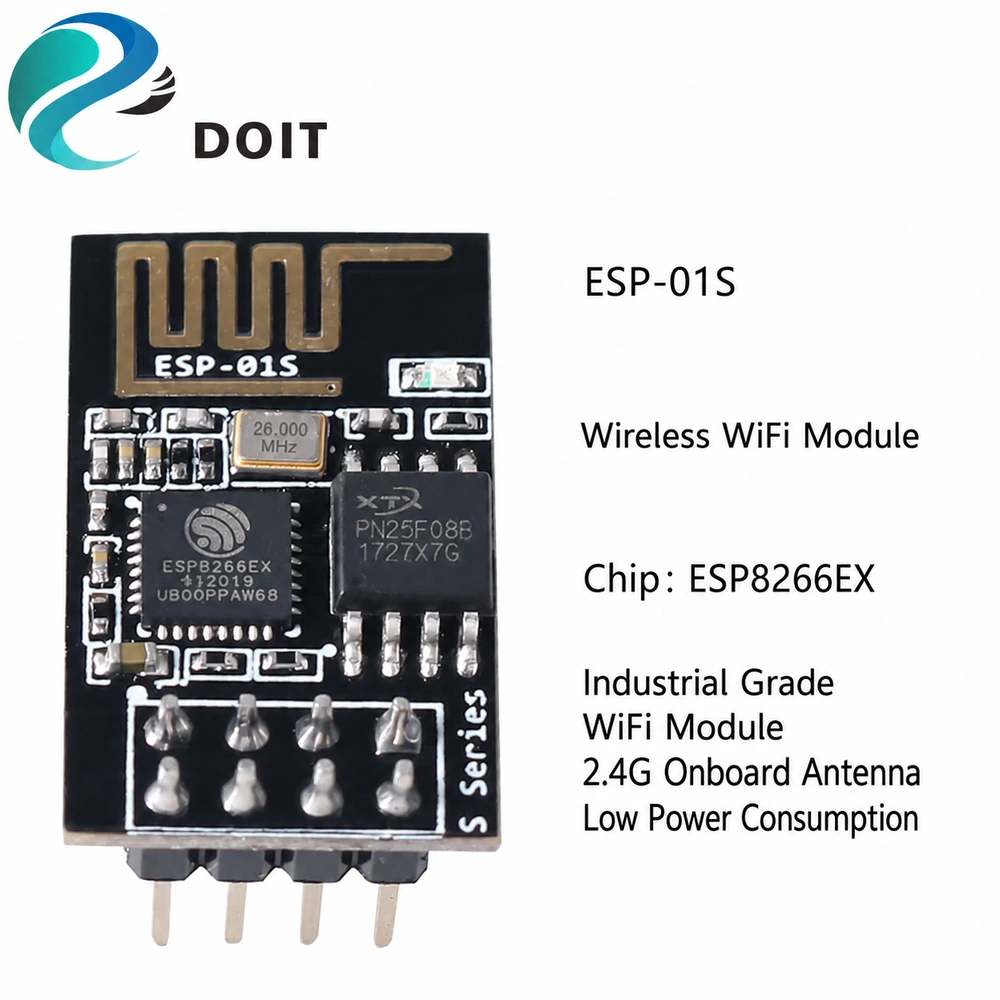
For surface-mount applications, ESP-F/F1 or ESP-M1/M2 modules are recommended. For through-hole applications, the ESP-01S is recommended.
What is the difference between ESP-F, ESP-12E, and ESP-12F?
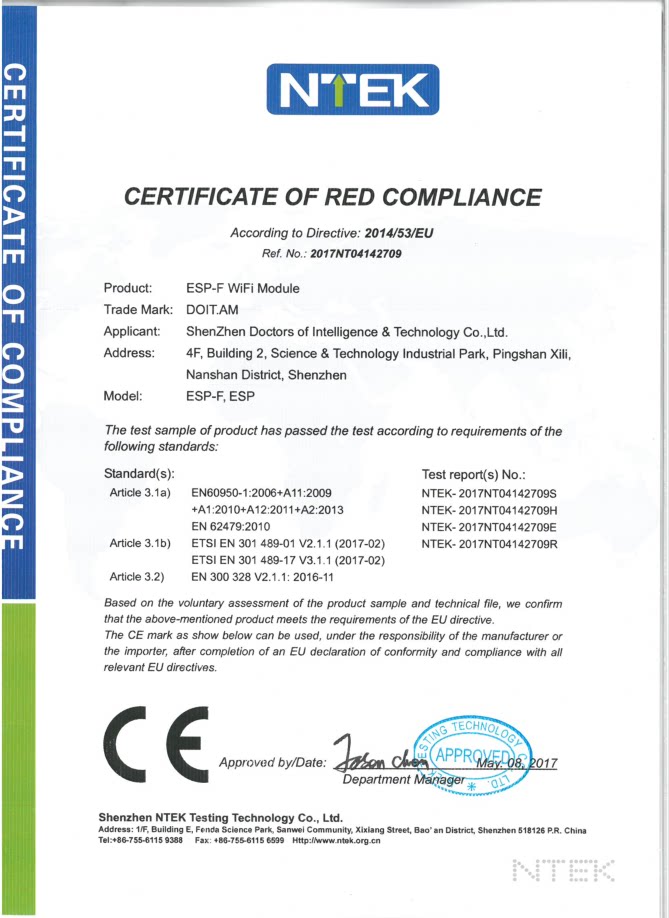
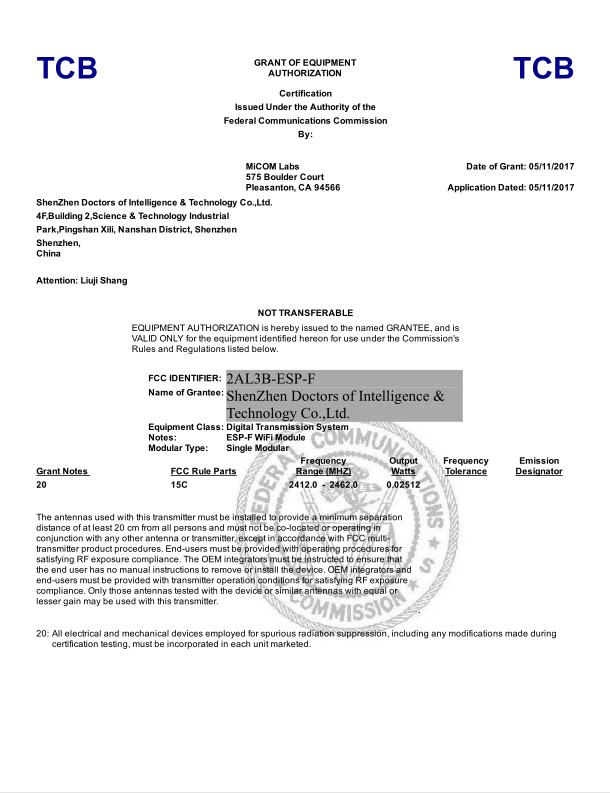
ESP-F uses a four-layer PCB, while ESP-12E and ESP-12F use two-layer PCBs. For certification and signal-stability requirements, ESP-F is recommended and supports FCC, CE, and SRRC certification.
What are the general performance specifications of ESP-series modules?
ESP-series modules operate at 80-160 MHz. The maximum UART transfer rate is 115200 × 40, approximately 4.5 Mbps. ESP8266 modules support up to 16 MB of external flash. The ESP series provides 160 KB of RAM, with less than 50 KB typically available to user applications. The internal ADC is 12-bit, while the API returns a 10-bit value.
Which ESP-series module offers the longest transmission distance?
Range depends on antenna design. In open-field testing, ESP-F/M/S modules reach approximately 150 m, ESP-12F/12E approximately 100 m, and ESP-01/01S/07 approximately 70 m.
Can ESP-07 modules share an antenna?
They can, but this is not recommended because antenna efficiency will be significantly reduced.
What is the maximum packet length for TCP and UDP transmission?
The maximum TCP packet length is 1460 bytes and the maximum UDP packet length is 1472 bytes.
Why can packet loss occur during transparent transmission?
Packet loss may occur when serial flow control is not enabled.
Overview
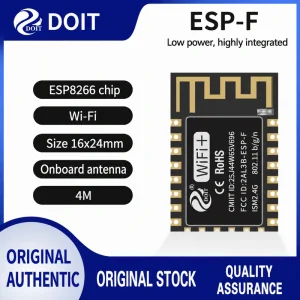
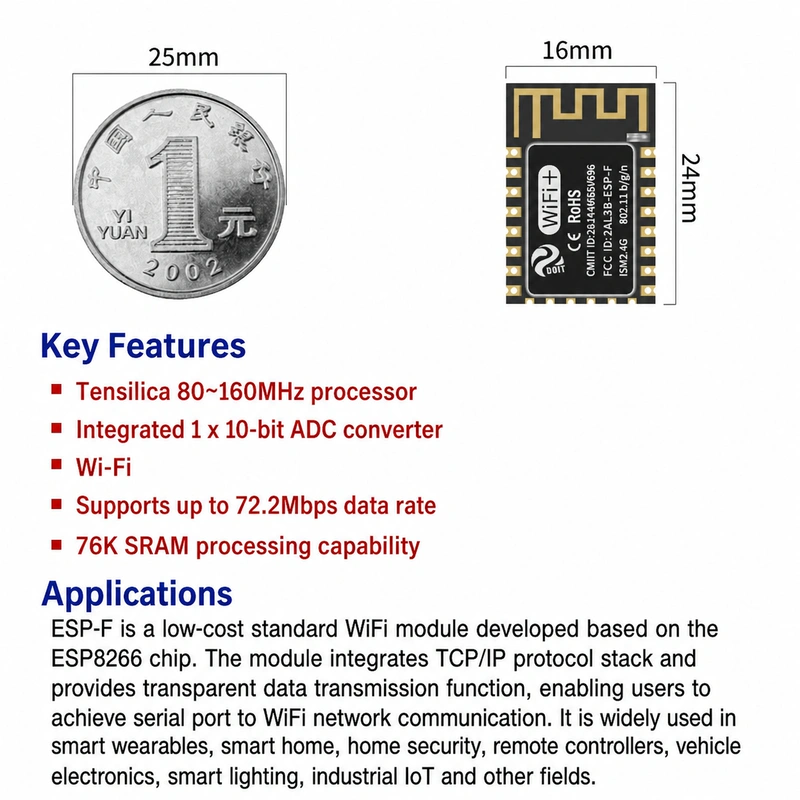
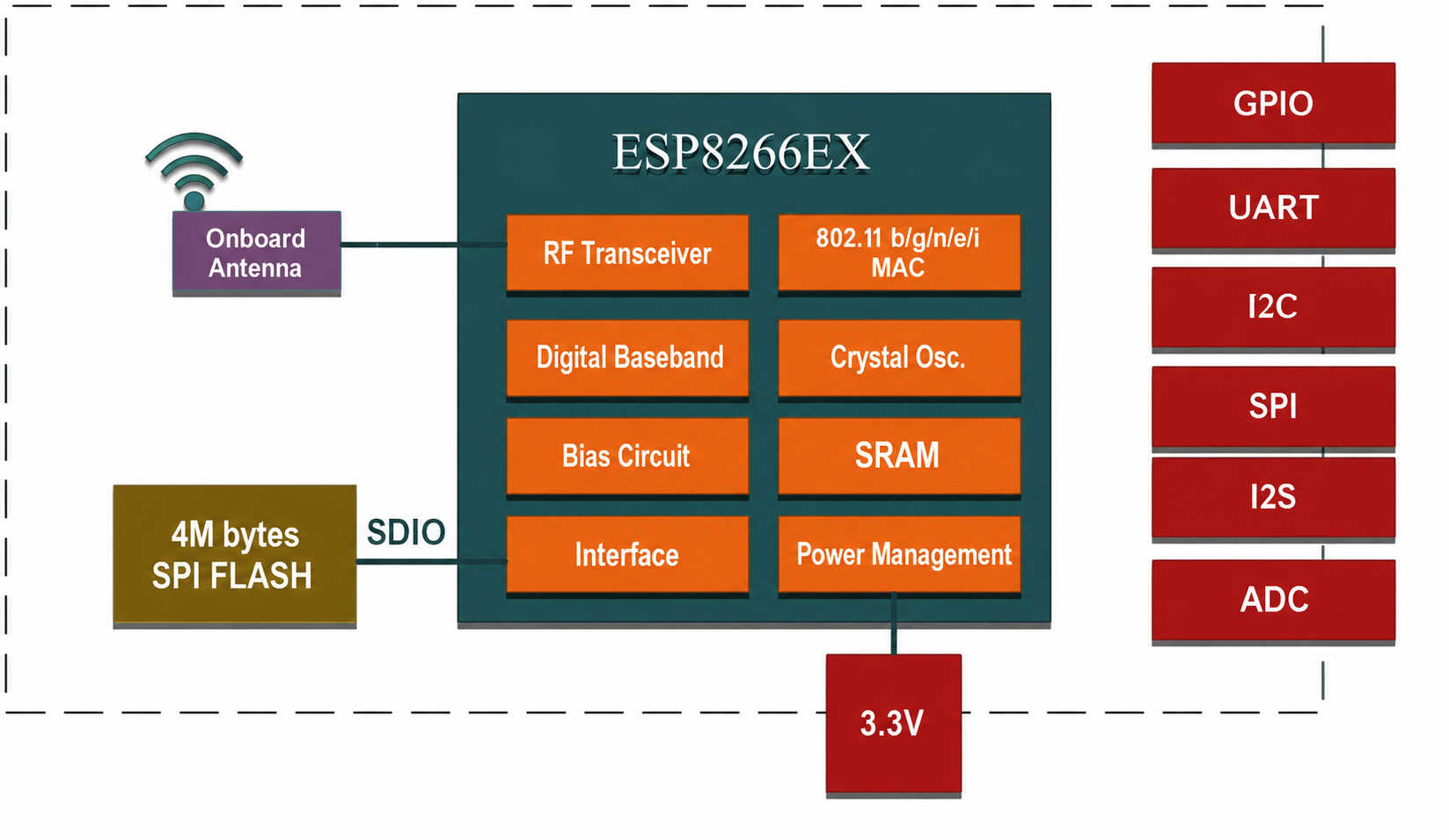
The ESP-F uses the cost-effective ESP8266EX SoC. Its Tensilica L106 ultra-low-power 32-bit processor supports 80 MHz and 160 MHz operation and RTOS. It can operate independently or as a slave to a host MCU, and can also serve as a Wi-Fi adapter through SPI/SDIO or UART.
The module supports IEEE 802.11 b/g/n/e/i and a complete TCP/IP stack, providing a practical low-cost way to add Wi-Fi to embedded systems.
SoC, Wi-Fi, and Interfaces
- Integrated TCP/IP stack and one high-precision 10-bit ADC.
- Interfaces: HSPI, UART, I2C, I2S, infrared remote control, PWM, and GPIO.
- Deep-sleep current: 10 µA; shutdown current: less than 5 µA.
- Wake, connect, and transmit data within 2 ms; standby power below 1.0 mW in DTIM3.
- IEEE 802.11 b/g/n/e/i, Station/SoftAP/SoftAP + Station, Wi-Fi Direct P2P, WPS, WPA/WPA2-PSK, roaming, OTA, and SmartConfig.
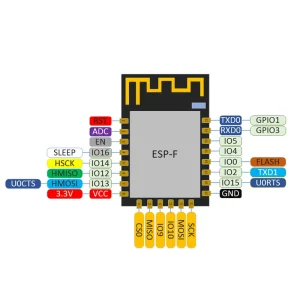
- 2 × UART, 1 × ADC, 1 × EN, one wake-up pin, HSPI, I2C, I2S, and up to 11 GPIOs.
- 4 MB SPI flash.
- Operating temperature: -40°C to 85°C.
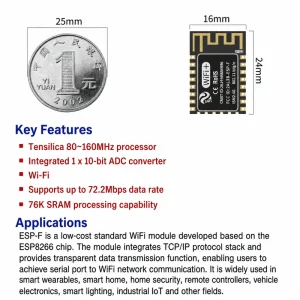
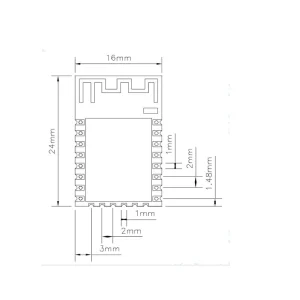
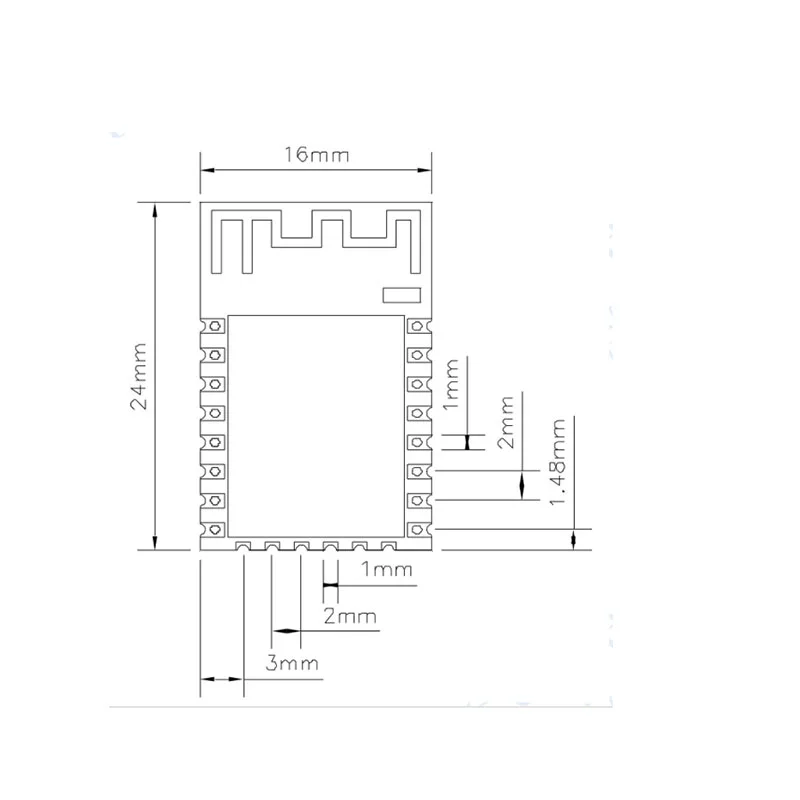
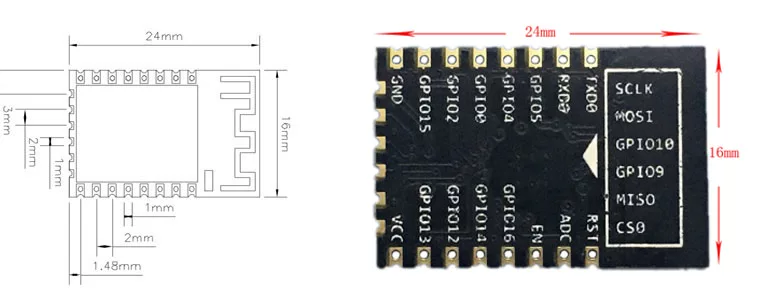
- Module dimensions: 16 × 24 mm.
Applications
Home appliances, smart homes, baby monitors, sensor networks, security ID tags, wireless location systems, home automation, mesh networks, IP cameras, wearable electronics, and industrial wireless control.
module structure
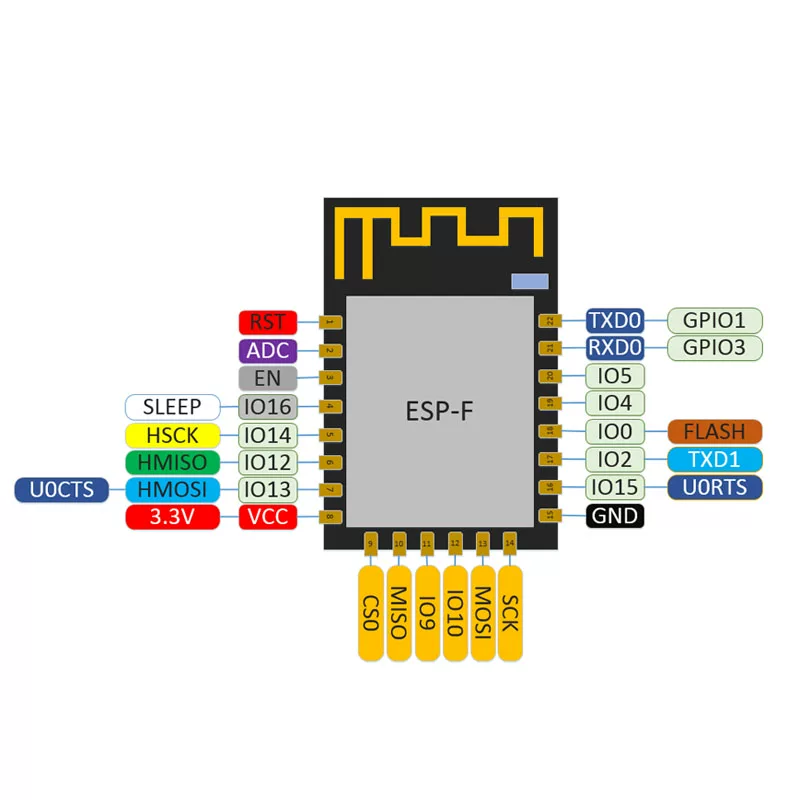
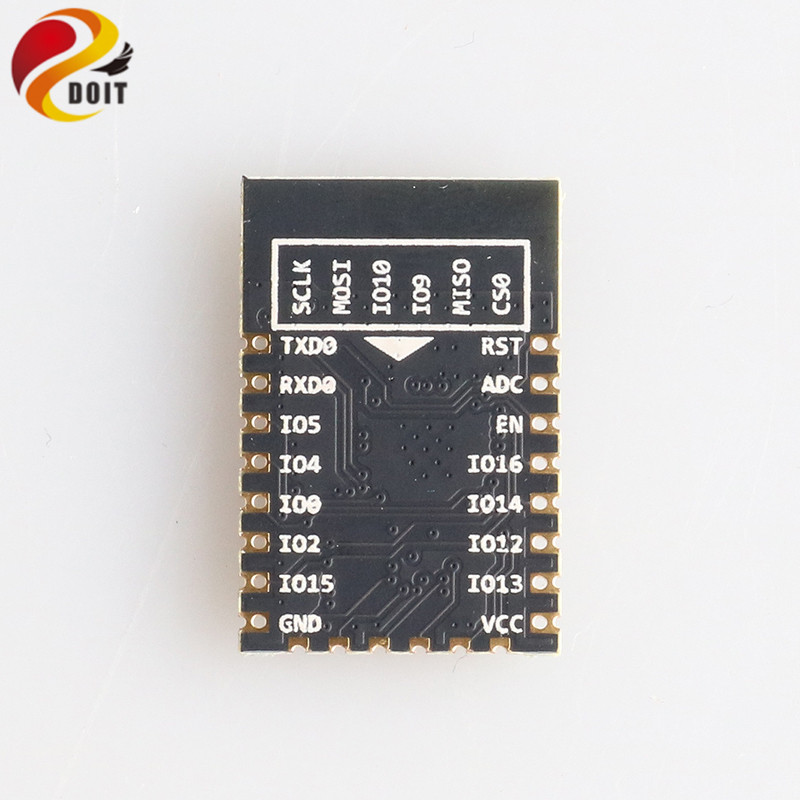
Pinout Diagram

Mechanical Dimensions
Power, Programming, and Layout Notes
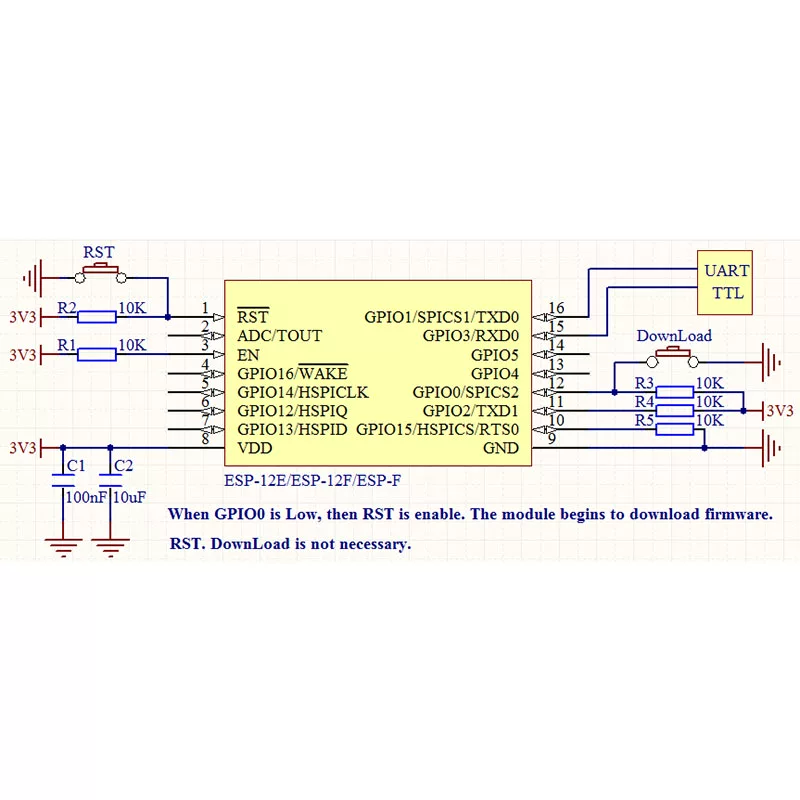
- Use a regulated 3.3 V DC supply capable of at least 500 mA.
- The maximum output current of a Wi-Fi module I/O pin is 12 mA.
- NRST is active low and EN is active high.
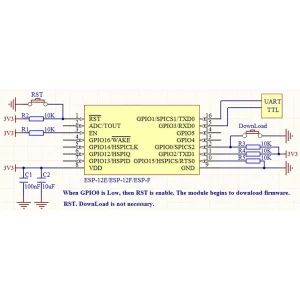
- For firmware-download mode, hold GPIO0 low and reset or power-cycle the module. For normal operation, hold GPIO0 high and reset or power-cycle the module.
- Connect the module RXD to the external MCU TXD, and connect the module TXD to the external MCU RXD.
Certification
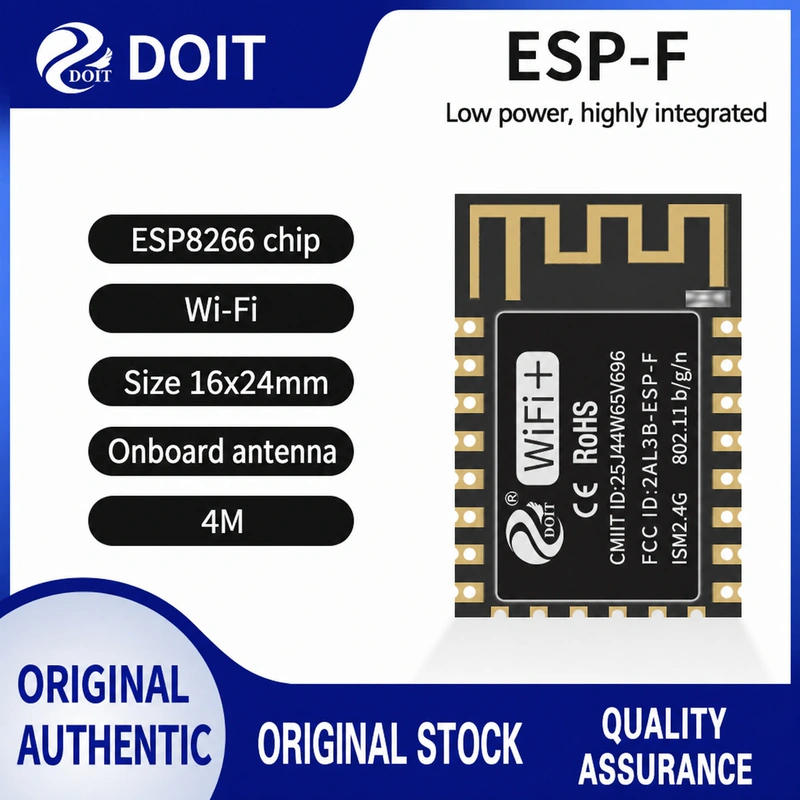
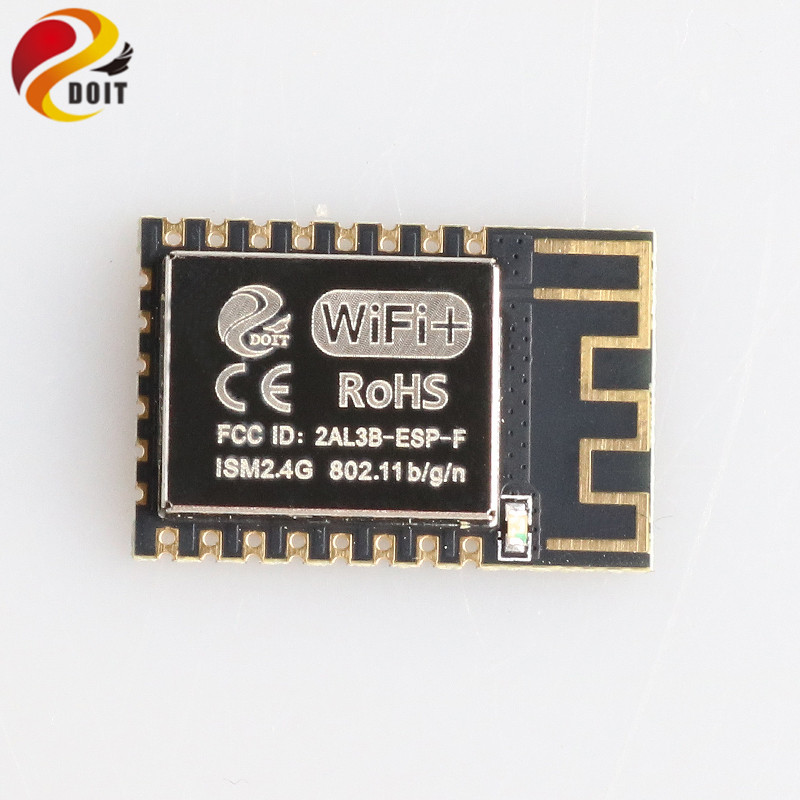
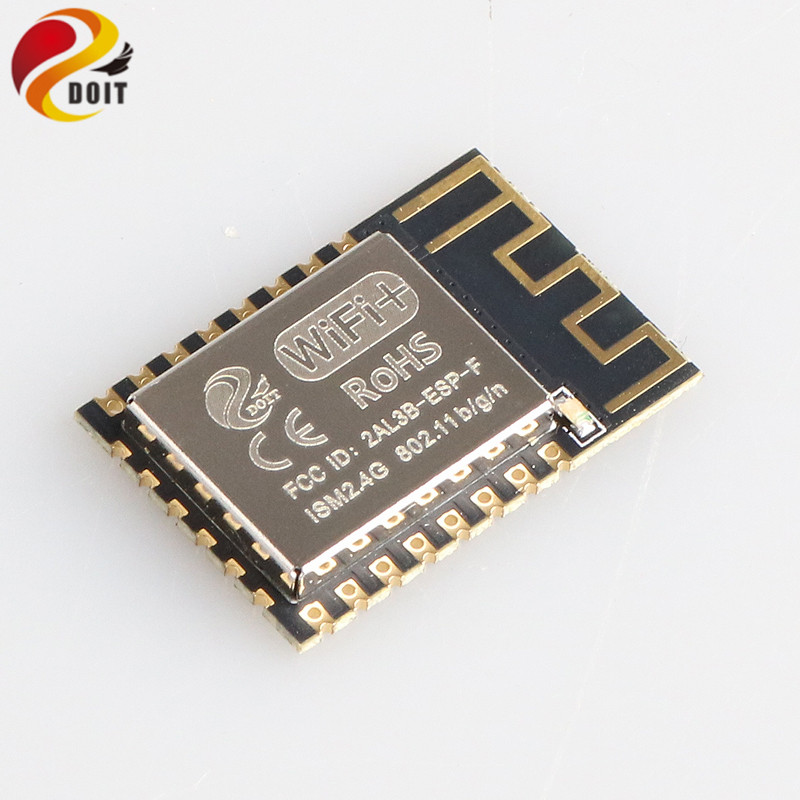
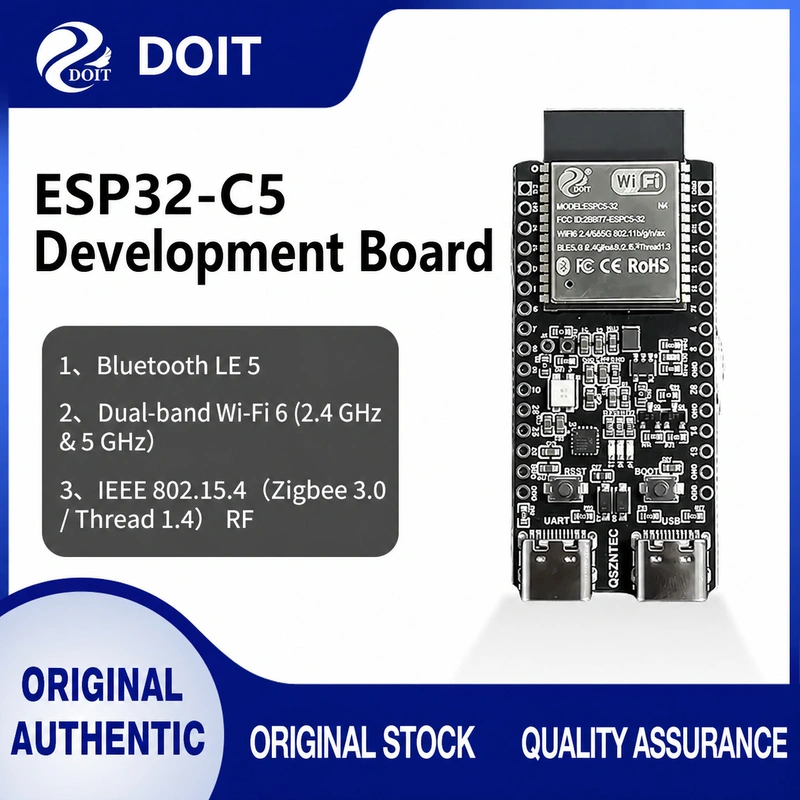
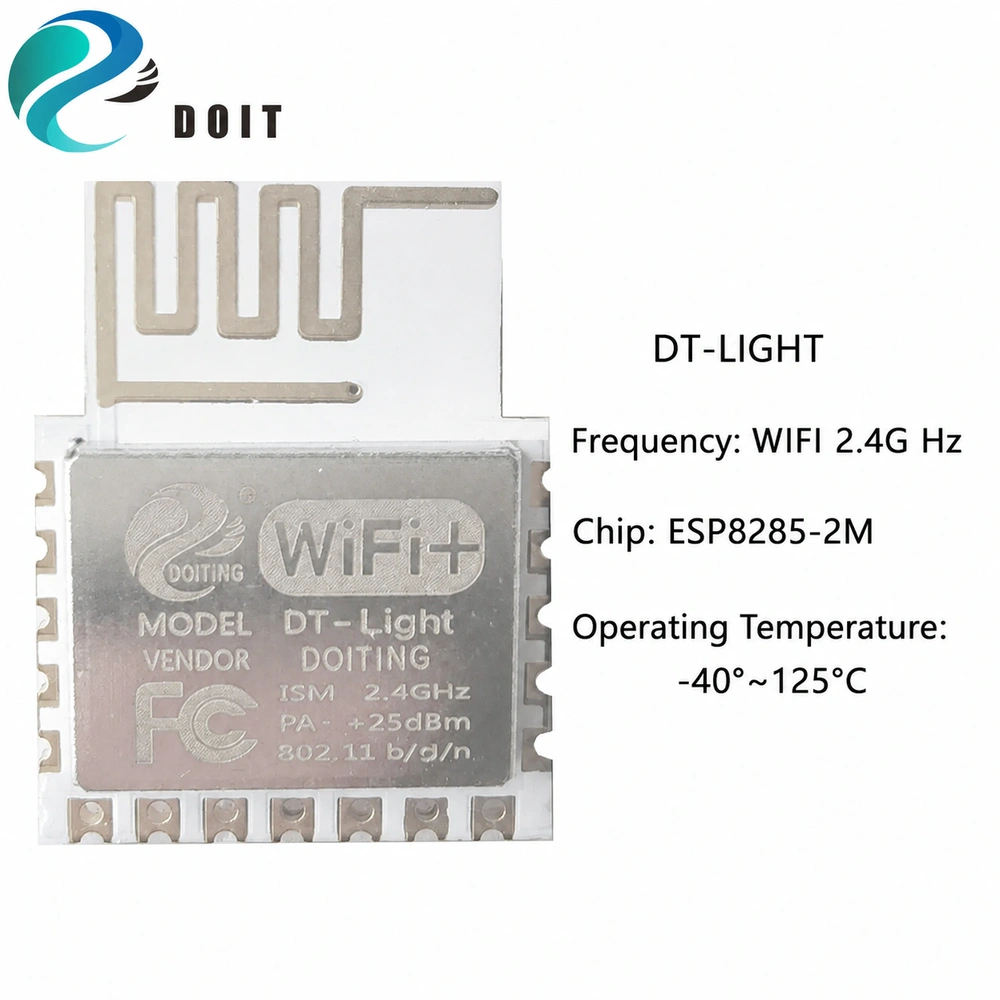
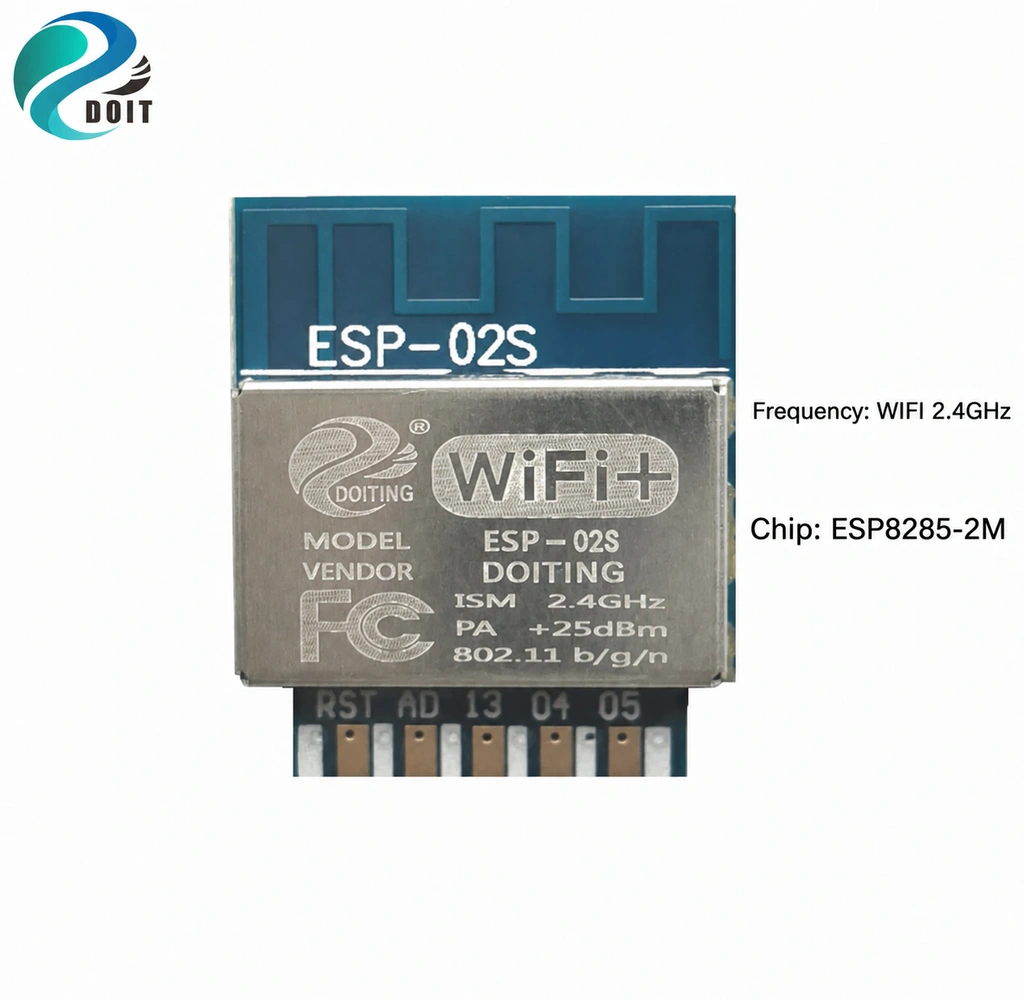
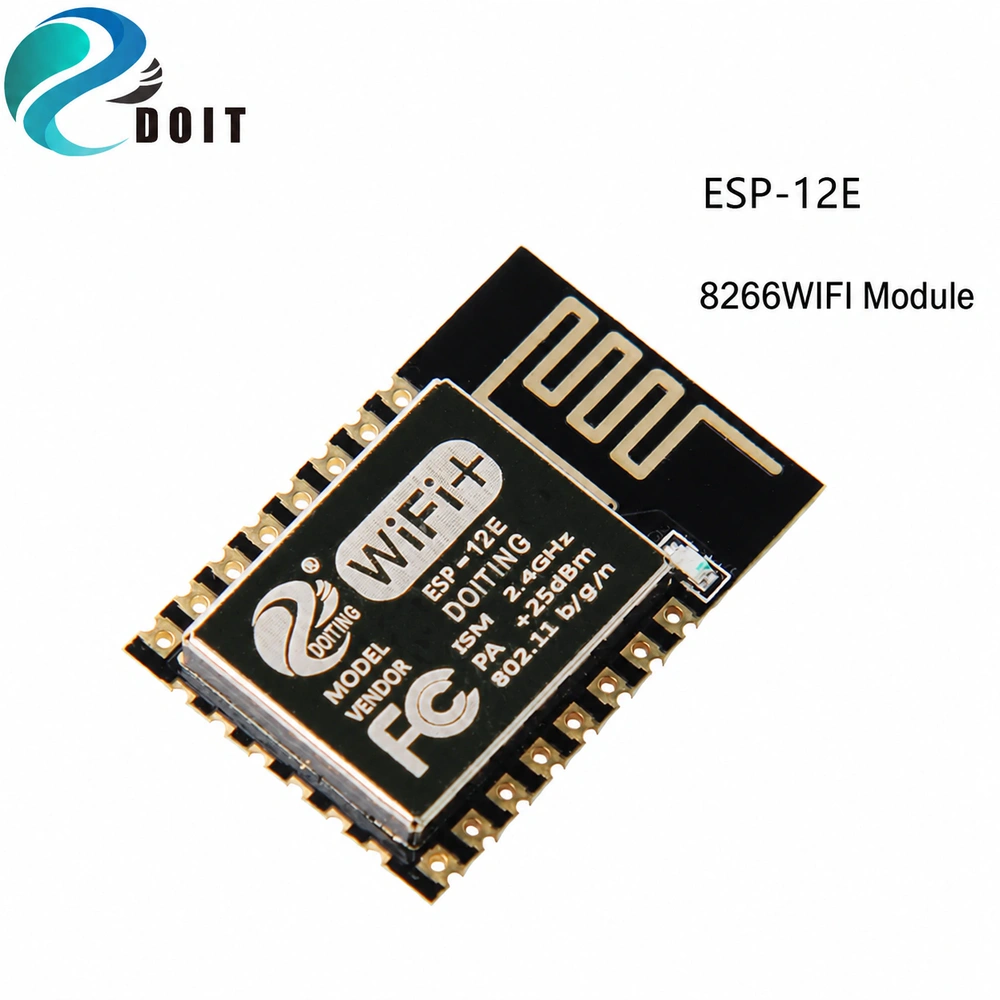
The ESP-F design is intended for applications requiring FCC, CE, and SRRC certification support. The translated images below include module structure, pin assignment, dimensions, reference circuit, certification material, and product views.
Authoritative Certification
Reviews
There are no reviews yet.