
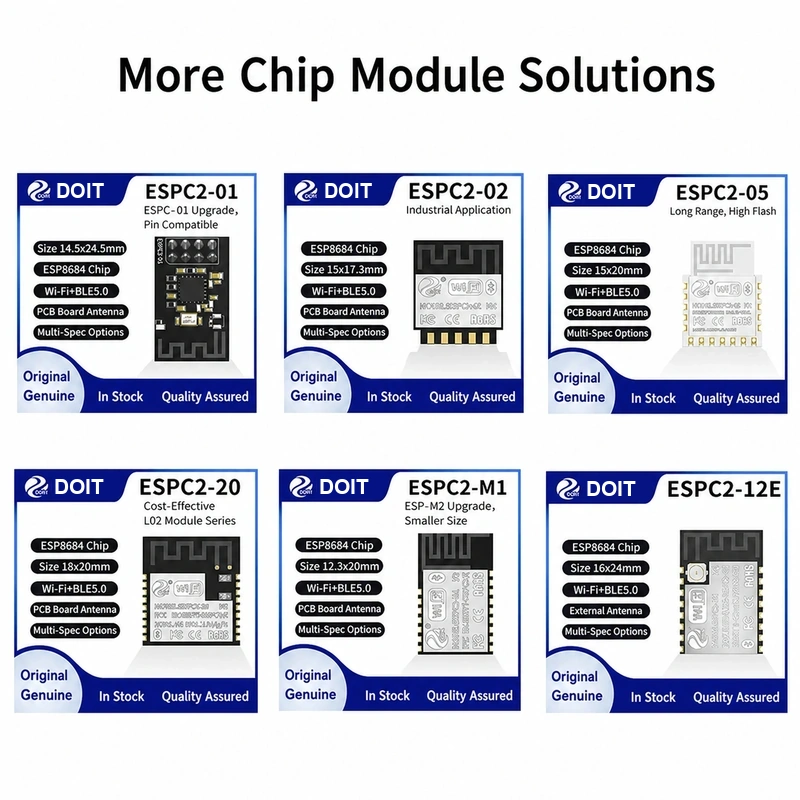


Description
Parameter information
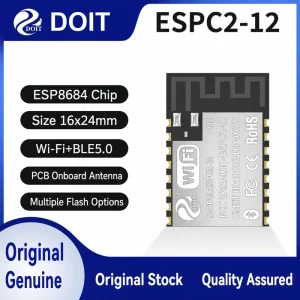
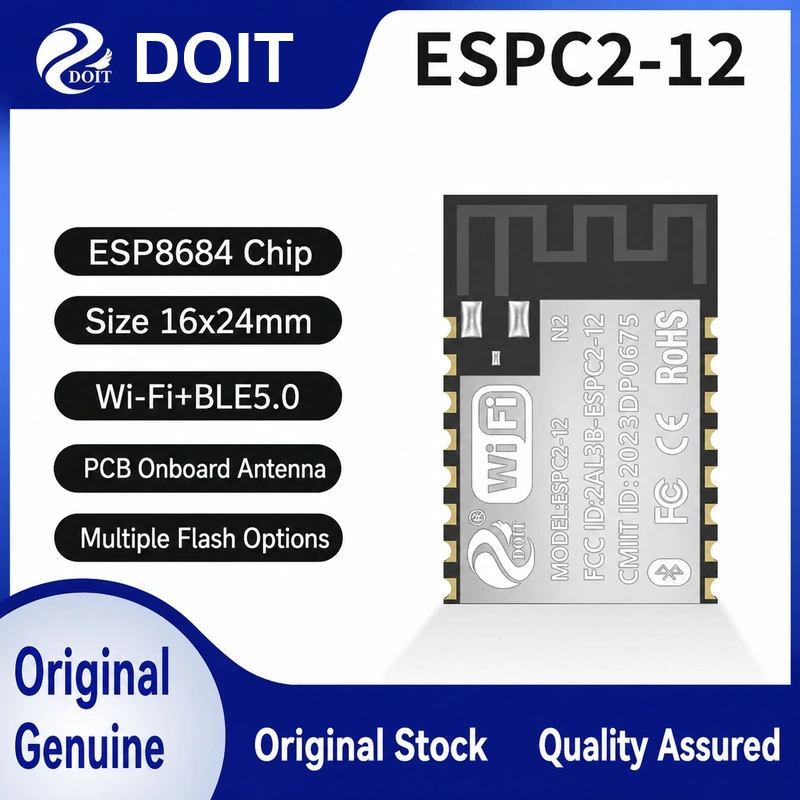
model: ESPC2-12
brand: doit
Place of origin: Chinese mainland
Antenna type: Onboard
Image and text details
Data download address:
http://bbs. doit. am (ESP32-C2/C3)
http://bbs. doit. am (ESP32-C2/C3)
Product Overview
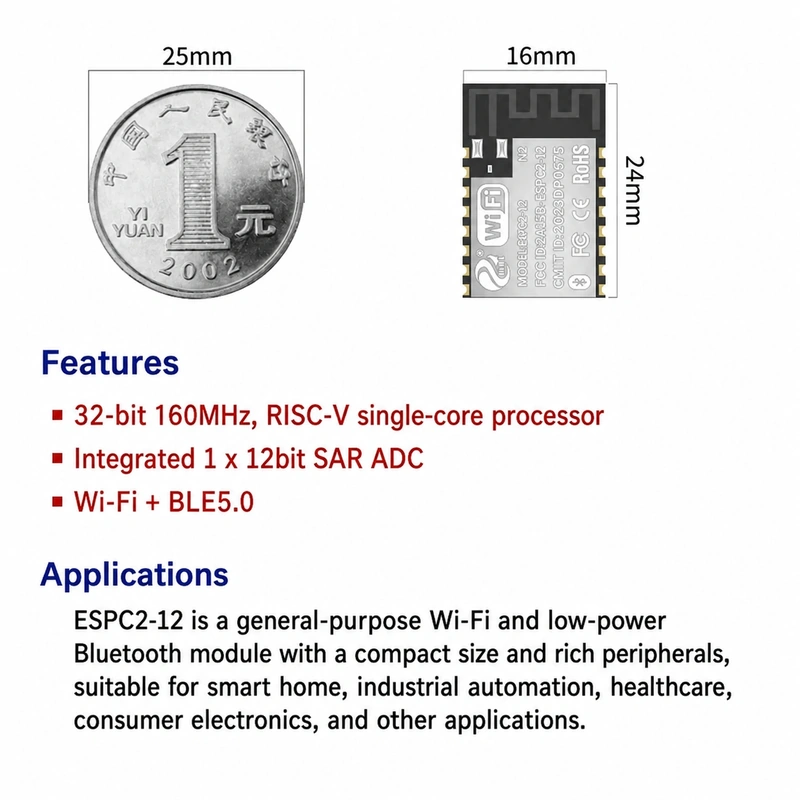
The ESPC2-12 is a wireless module based on Espressif’s ESP8684. The ESP8684 is an ultra-low-power SoC featuring a 32-bit single-core RISC-V processor and supporting IEEE 802.11 b/g/n 2.4 GHz Wi-Fi and Bluetooth 5 Low Energy (BLE).
Product Features
Wi-Fi
- Supports IEEE 802.11 b/g/n
- Supports a 20 MHz channel bandwidth in the 2.4 GHz band
Bluetooth
- Bluetooth Low Energy subsystem with Bluetooth 5 support
CPU and Memory
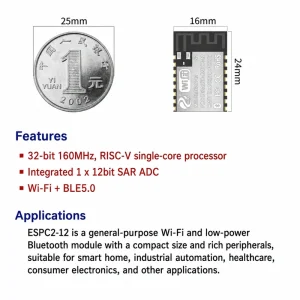
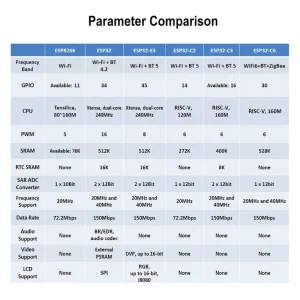
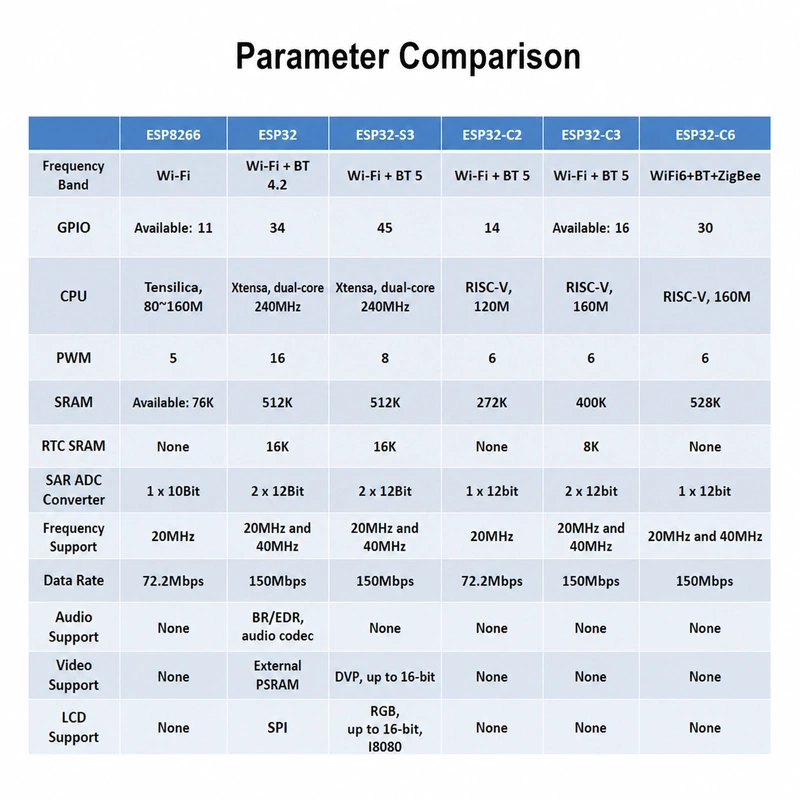
- 32-bit single-core RISC-V processor with a clock frequency of up to 120 MHz
- 272 KB of integrated SRAM, including 16 KB dedicated to cache
- 576 KB of ROM
Advanced Peripheral Interfaces and Sensors
- 13 GPIO pins
Digital Interfaces
- 3 × SPI interfaces
- 2 × UART interfaces
- 1 × I²C master interface
- LED PWM controller with up to six channels
- General-purpose DMA controller (GDMA) with one receive channel and one transmit channel
Analog Interfaces
- 1 × 12-bit SAR ADC with up to five channels
- 1 × temperature sensor
Timers
- 1 × 54-bit general-purpose timer
- 2 × watchdog timers
- 1 × 52-bit system timer
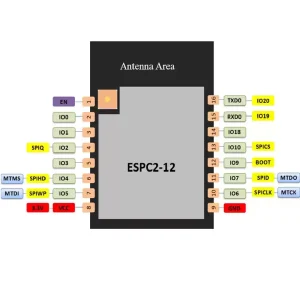
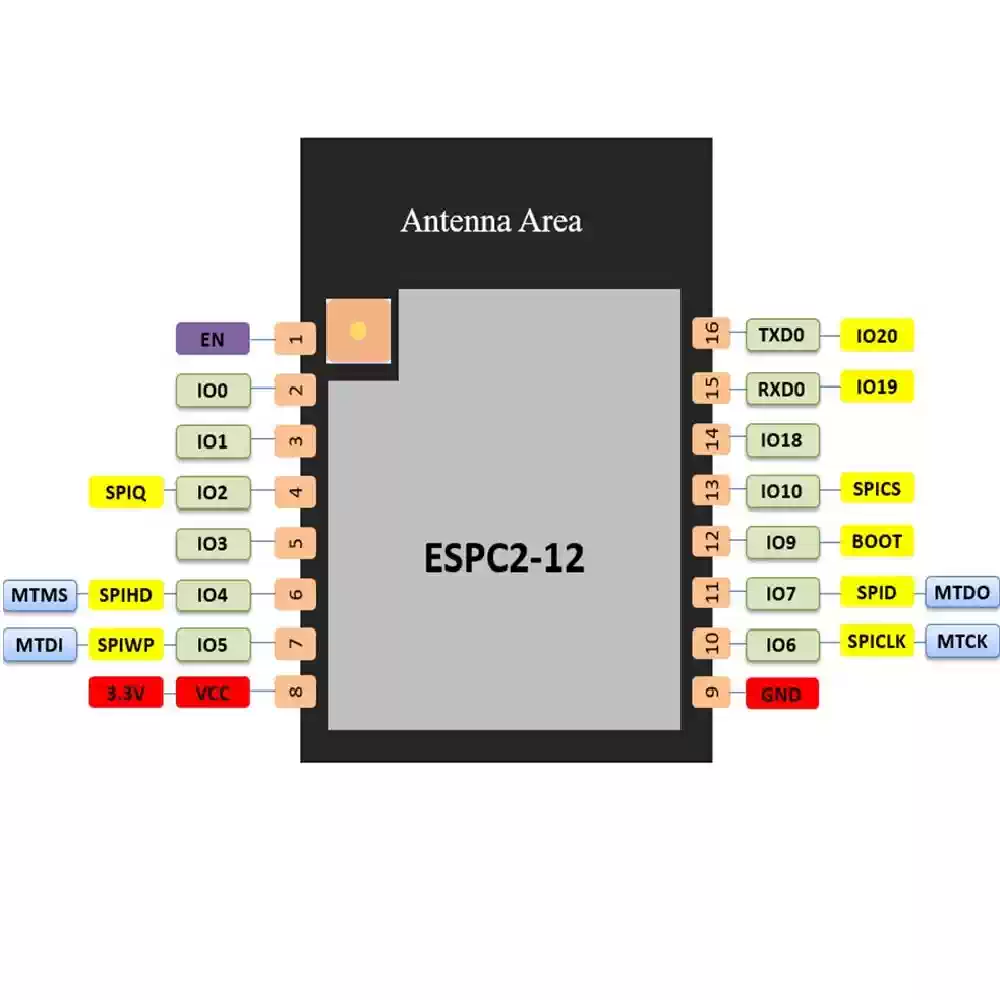
1、Pinout Diagram

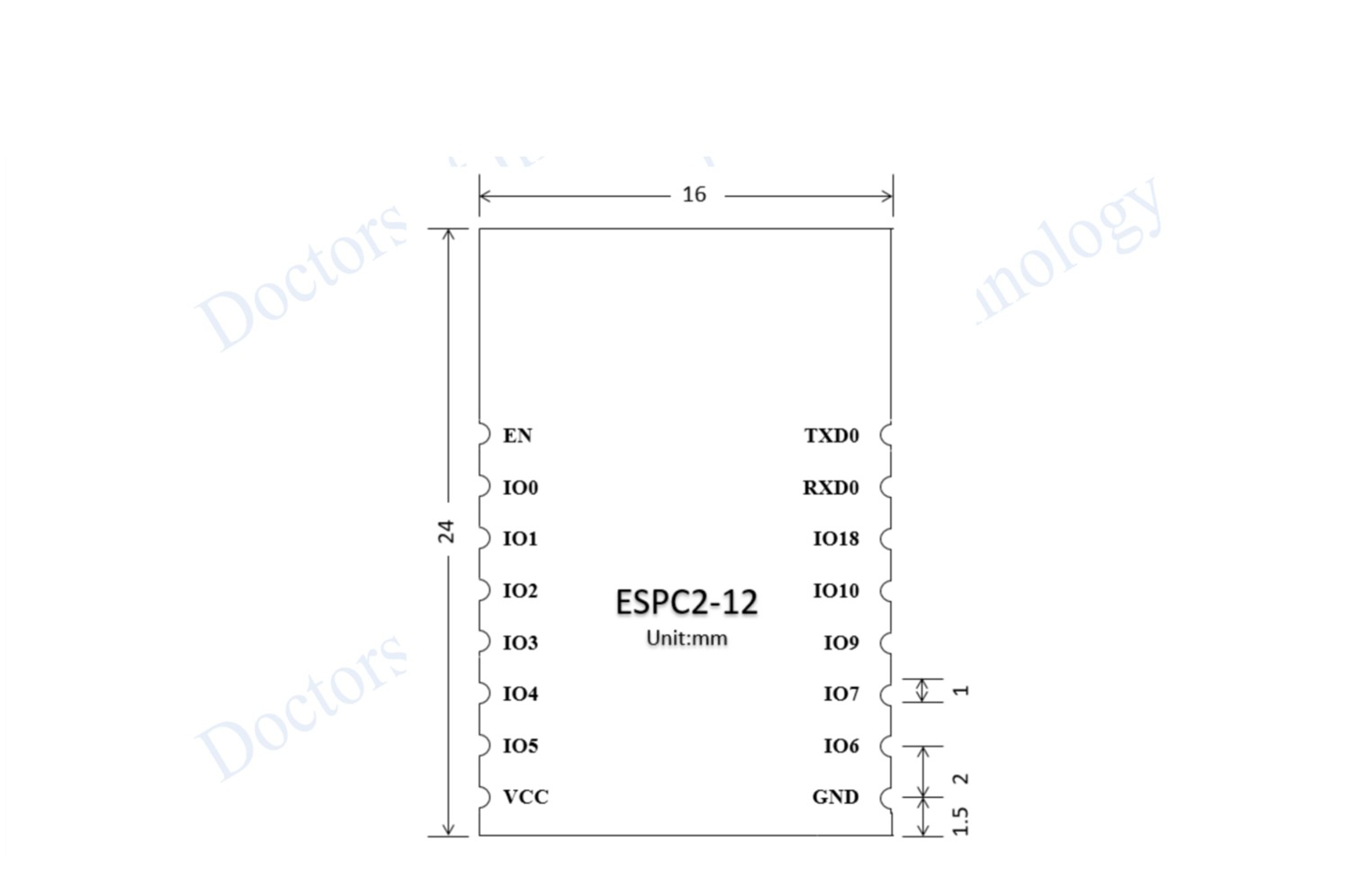
2、Package Drawing
3、Application Schematic
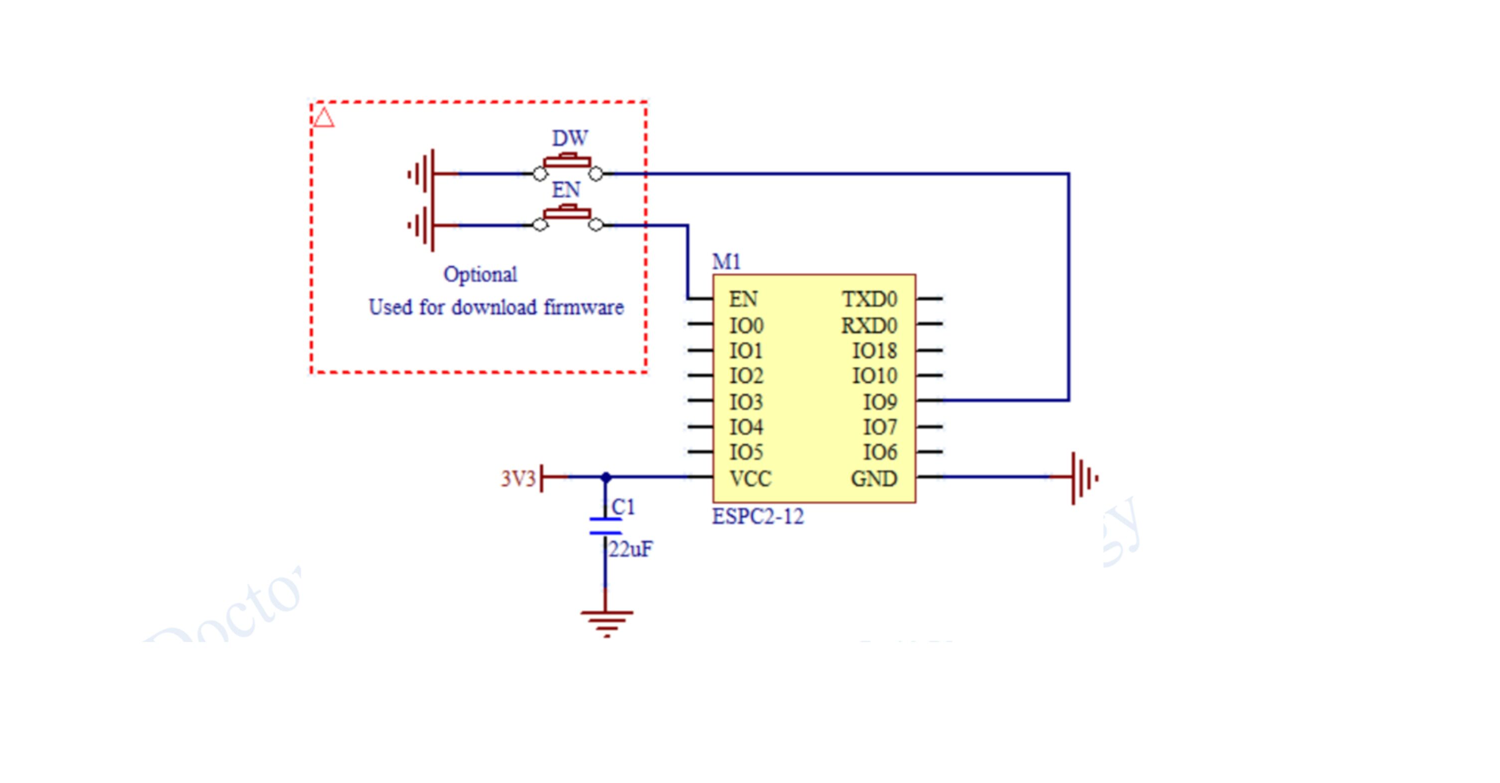
Firmware Download Procedure
Pull GPIO9 low by connecting it to ground to enter firmware download mode. After programming is complete, disconnect GPIO9 from ground; otherwise, the module will not operate normally.
Important Notes
- The ESP8684 may draw an instantaneous RF current of up to 400–500 mA. Therefore, the power supply must provide at least 500 mA. LDO regulators such as the XC6206 and 7533 must not be used.
- To meet the 500 mA power requirement, the power and ground traces should be at least 30 mil wide. If vias are required on the power traces, using two or three vias is recommended to reduce the impact of PCB manufacturing variations.
- For optimal RF performance, follow the module placement guidelines provided in the datasheet. If product certification is required, avoid routing parallel traces near the PCB antenna. The firmware download pads should be positioned away from the antenna.
- Completely erase the module’s flash memory before downloading the firmware. Otherwise, some modules may fail to boot.
Reviews
There are no reviews yet.